

IBM Quantum
We deliver IBM Quantum to the enterprise.
Algorithms developed for telecom, the public sector, finance, manufacturing and defense. Run on Qiskit and IBM quantum systems, verified against the classical optimum, labelled on every result, and integrated into operations through VENETA WorldModel.
Partnership
IBM Quantum GSI (Global Systems Integrator) agreement signed.
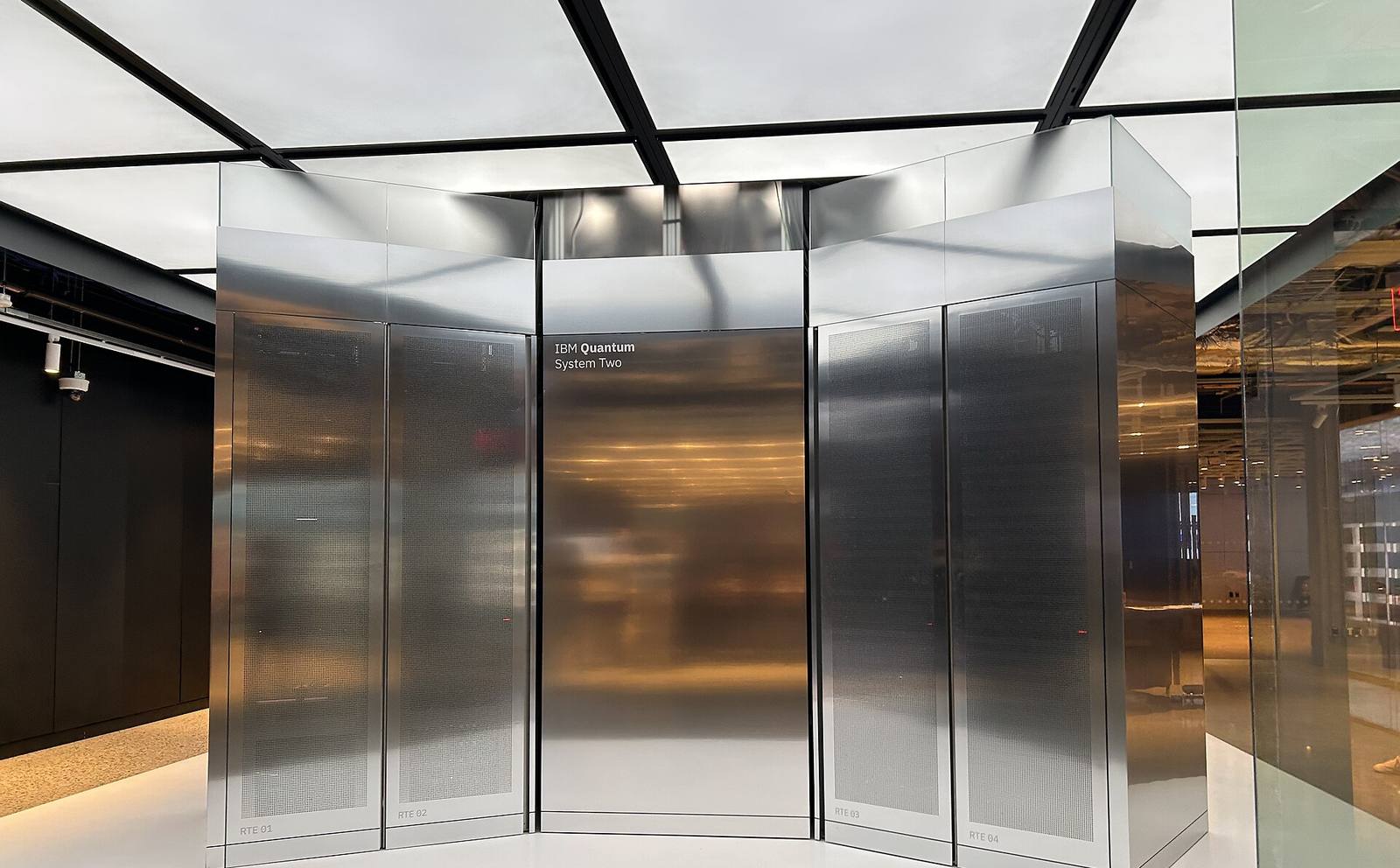
VENETA Korea Inc., which contracts IBM Quantum delivery for VENETA, signed the IBM Quantum GSI (Global Systems Integrator) agreement on 30 September 2026. Signed 30 September 2026. Our quantum path is IBM only: Qiskit, the Aer simulator, IBM quantum systems and the IBM roadmap.
What this means for a customer: the algorithms are built and run by a team that works inside the IBM Quantum ecosystem, on IBM systems, with IBM's tooling, and the results come back with the labels that let your own experts check them.
What we deliver
From the problem to production.
Algorithm development
The combinatorial part of an operations question becomes an optimisation instance with a known classical optimum to compare against.
Simulation
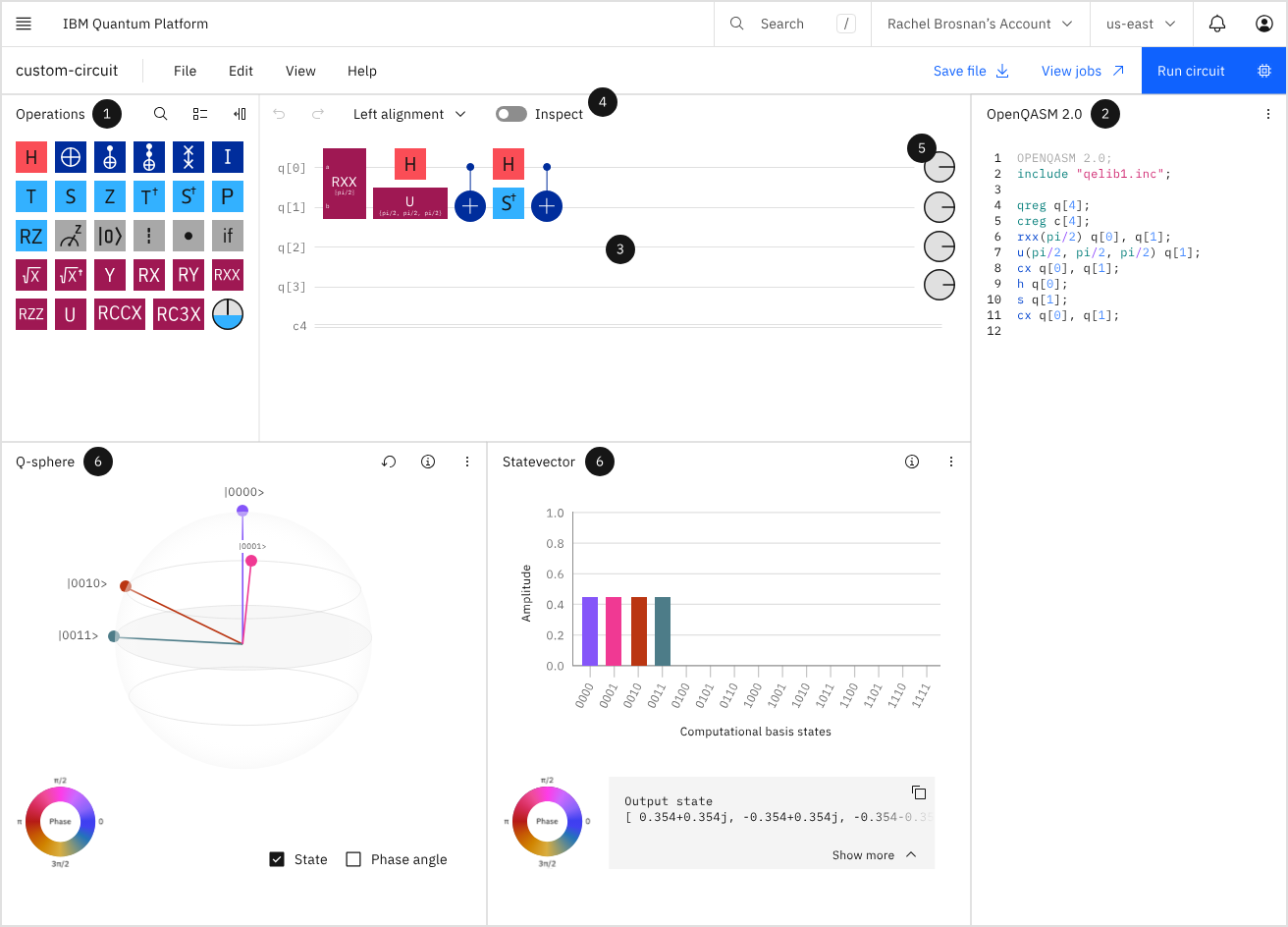
QAOA on Qiskit with the Aer simulator, inside the network. Most questions are answered here.
Hardware runs
IBM quantum systems, noise-aware: the layout with the highest estimated fidelity among several, with error suppression on, results cached and reproducible.
Verification and integration
Gap to the classical optimum, rank among feasible plans, lift over random, a verdict from the calibration data, and integration into WorldModel.
Industries
Where the algorithms run.
Telecom
Site and channel assignment, crew dispatch, night-time cell sleep, backhaul rerouting.
Public sector
Allocation and scheduling problems for public infrastructure, delivered inside closed networks.
Finance
Portfolio and hedging composition, settlement batching.
Manufacturing
Process and equipment scheduling, material routing, inspection resources.
Defense
Allocation and scheduling in closed networks, with hardware runs only when the egress policy allows.
Your problem class
Bring the question; we formulate it and tell you whether quantum earns its place.
What a result carries
Every number has its label.
- Backend
- Simulator or the named IBM system.
- Qubits · shots · depth
- What was used and how deep the circuit was.
- Gap
- Distance to the known classical optimum.
- Rank and lift
- Where the chosen plan ranks among all feasible plans, and its lift over a random plan.
- Verdict
- QPU-ready, marginal, or beyond the depth budget, from the system's calibration data.
- Larger instances
- Solved as neighbourhoods that fit the hardware. The loop around them stays classical, and is labelled as such.
IBM Quantum roadmap
We build on the roadmap, not ahead of it.
IBM publishes a development roadmap and updates it every year. The 2025 update puts Nighthawk processors at 120 qubits and 7,500 gates in 2026, growing to 15,000 gates by 2028 with up to nine processors linked; Starling, the first large-scale fault-tolerant system with 200 logical qubits and 100 million gates, in 2029; and Blue Jay, with 2,000 logical qubits and one billion gates, after 2033. IBM expects the first demonstrations of quantum advantage by the end of 2026.
Our delivery follows that line. The instances we run today fit the utility-scale Heron and Nighthawk systems, our depth budget tells you whether an instance is ready for the hardware, and the parts of a question that need fault tolerance stay on the simulator until the hardware arrives. Every roadmap figure above is IBM's statement, not ours.
IBM's roadmap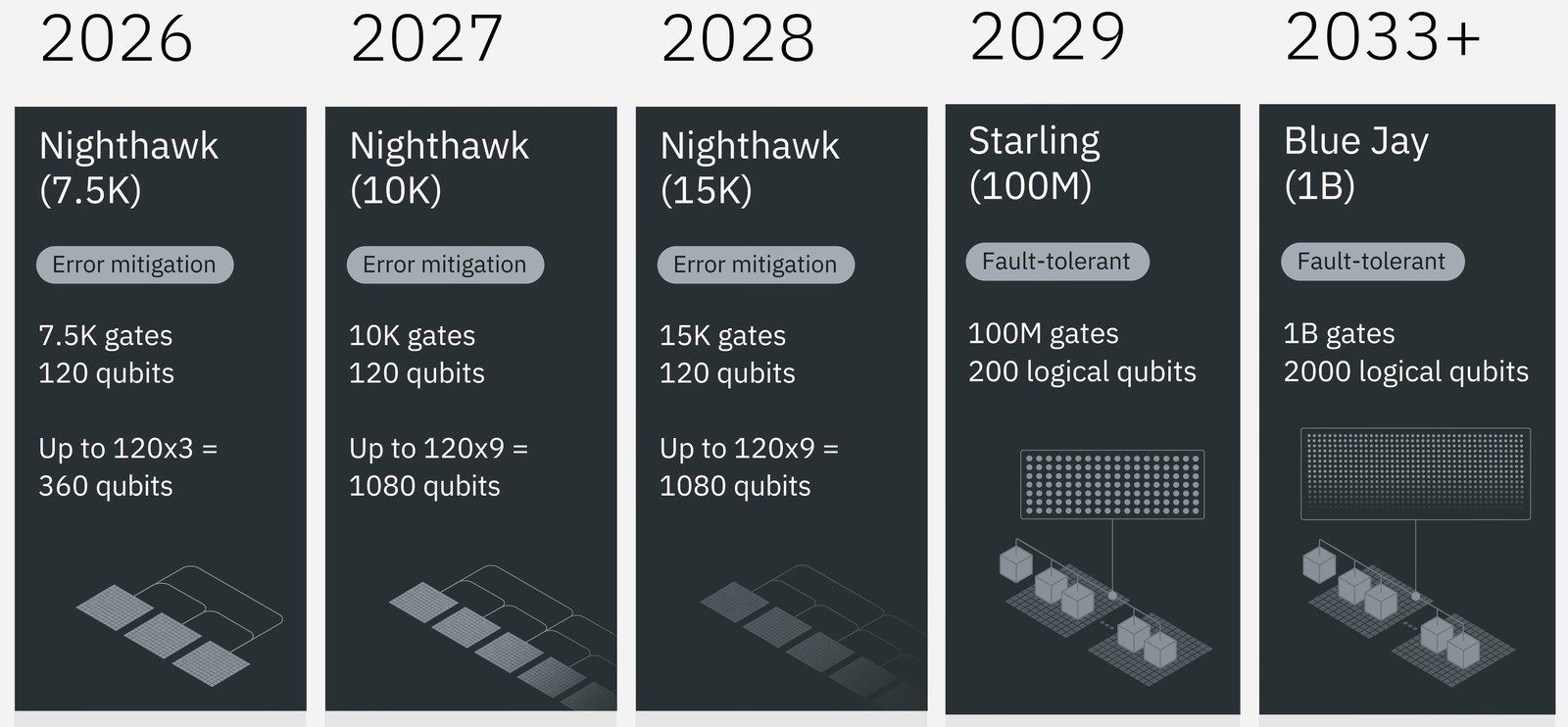
Egress
Nothing leaves unshielded.
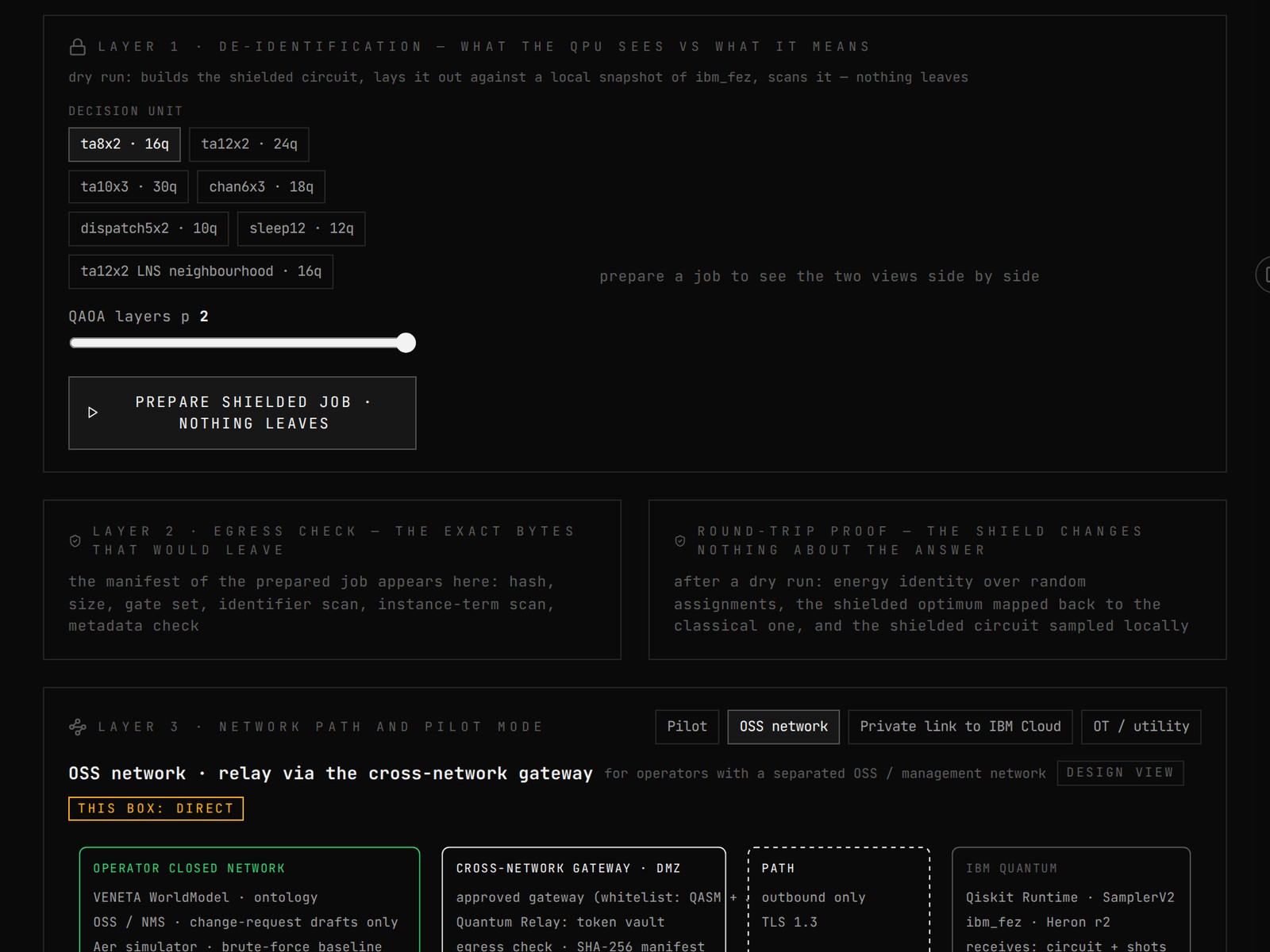
Every submission goes through VENETA Sentinel: the instance is transformed so that labels, order, signs and scale stay hidden; the payload is scanned and hashed; one line is written to an append-only egress ledger. The shield does not hide the shape of the graph, and we say so.
Talk to us about your operating data.
Tell us which system holds the question you cannot ask today. A person answers every message.